| 일 | 월 | 화 | 수 | 목 | 금 | 토 |
|---|---|---|---|---|---|---|
| 1 | 2 | 3 | 4 | 5 | 6 | |
| 7 | 8 | 9 | 10 | 11 | 12 | 13 |
| 14 | 15 | 16 | 17 | 18 | 19 | 20 |
| 21 | 22 | 23 | 24 | 25 | 26 | 27 |
| 28 | 29 | 30 |
- 보트빌딩용어
- boatbuilding terms
- boatbuilder education
- boat parts explained
- Woodworking Machines
- Manual Handling
- frp보트
- yachtbuilding
- shipwright
- yacht design basics
- Bevels
- sailing vocabulary
- Developable Surfaces
- 안전 들기
- 요트제작
- marineindustry
- TAFE
- 선박용어
- TAFE Boatbuilding
- Study Q&A
- compositeboat
- marine engineering
- MEM11011B
- 보트빌딩
- 조선용어
- boatbuilding
- 선박용어사전
- boat terminology
- Safe Lifting
- 목공 기계
- Today
- Total
The Yachtwright’s Legacy
보트 빌딩 용어 사전 - I, J, K, L - (Boatbuilding Dictionary - I, J, K, L -) 본문
보트 빌딩 용어 사전 - I, J, K, L - (Boatbuilding Dictionary - I, J, K, L -)
Governor of the Ocean 2026. 5. 14. 11:08원활한 정보 전달과 의사소통을 위한(Organise and communicate information)
보트 빌딩 용어 사전 - I, J, K, L - (Boatbuilding Dictionary - I, J, K, L -)
| ※ 읽기전 주의 사항 및 공지※ 우리나라 대한민국도 훌륭한 조선 기술을 가지고 있지만 세계 럭셔리 요트 시장에서의 입지는 상당히 낮은 편입니다. 그들과의 커뮤니케이션을 위해서라면 그들의 용어를 알아야 하는 게 필수적이라고 생각합니다. 이 때문에 이 블로그의 첫 프로젝트는 용어 설명으로 시작하겠습니다. 혹시나 틀린 정보가 있다면 너그러이 댓글로 정보 공유 부탁드립니다. 이 컨텐츠는개인이 세계 각국의 자료를 모아 만든 내용으로 최선을 다해 작성했음에도 ☆ 잘못된 정보 및 오역과 의역★이 있을 수 있는 점을 다시 한 번 양해 부탁드립니다. |
1. Inboard(인보드)→ Weight placed low in hull to improve stability.
📌 "인보드 엔진"은 선체 내부에 고정 설치된 엔진을 의미한다. 아웃보드 엔진은 선미 외부에 탈부착한다.
✔️ Situated within the hull — used to describe anything fitted or located inside the boat's sides, as opposed to outboard (outside). Often used to describe engine placement.
✍️ 선체 안쪽에 위치하는 모든 것을 가리키는 형용사. 아웃보드(outboard, 선체 바깥)의 반대 개념으로, 주로 엔진 배치 방식을 설명할 때 사용된다.
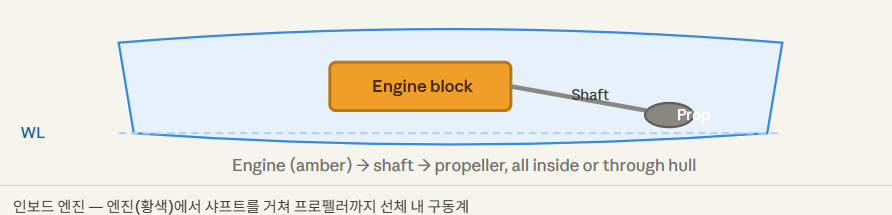
2. Inboard Engine(인보드 엔진)
📌 선저를 관통하는 샤프트 밀봉(shaft seal) 유지 관리가 중요하다. 누수 시 침수로 이어질 수 있다.
✔️ A propulsion engine permanently installed within the hull, connected to the propeller via a shaft that passes through the hull. More powerful and efficient than outboard engines for larger vessels.
✍️ 선체 내부에 영구 고정되어 샤프트(shaft)를 통해 프로펠러를 구동하는 추진 엔진. 아웃보드 엔진보다 대형 선박에 적합하며, 출력과 효율이 높다.
3. Inboard-Outboard(Sterndrive/I/O)(인보드-아웃보드/스턴드라이브)
📌 볼보 펜타(Volvo Penta) 등이 대표적 스턴드라이브 제조사다. 파워보트와 데이크루저에서 널리 사용된다.
✔️ A propulsion system with the engine mounted inboard but driving a steerable outdrive unit on the transom. Combines inboard power with outboard manoeuvrability.
✍️ 엔진은 선체 내부에 있지만, 구동 및 조향 장치(아웃드라이브)가 트랜섬 외부에 부착된 추진 시스템. 인보드의 강한 출력과 아웃보드의 조향 편의성을 결합한 방식이다.
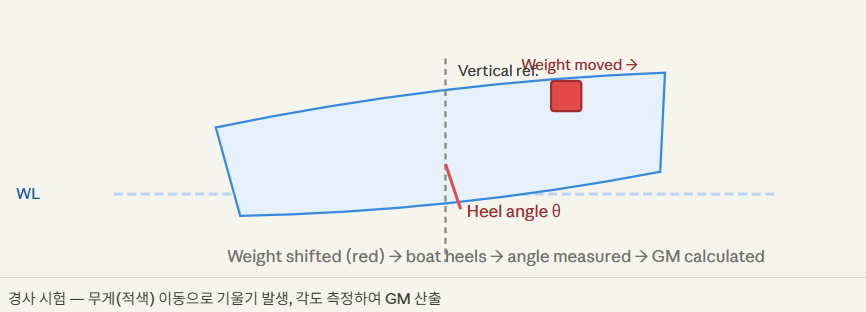
4. Inclining Test(경사 시험)
📌 새 선박 인도 전, 주요 수리 후, 또는 규정에 의해 정기적으로 실시한다. 결과는 선박 안정성 계산의 기초 데이터가 된다.
✔️ A stability test performed by moving known weights transversely across the deck and measuring the resulting heel angle. Used to determine the vessel's metacentric height (GM) and centre of gravity.
✍️ 데크 위에서 알려진 무게를 가로 방향으로 이동시키고 기울어지는 각도를 측정하여 선박의 메타센터 높이(GM)와 무게 중심(G)을 산출하는 안정성 시험.
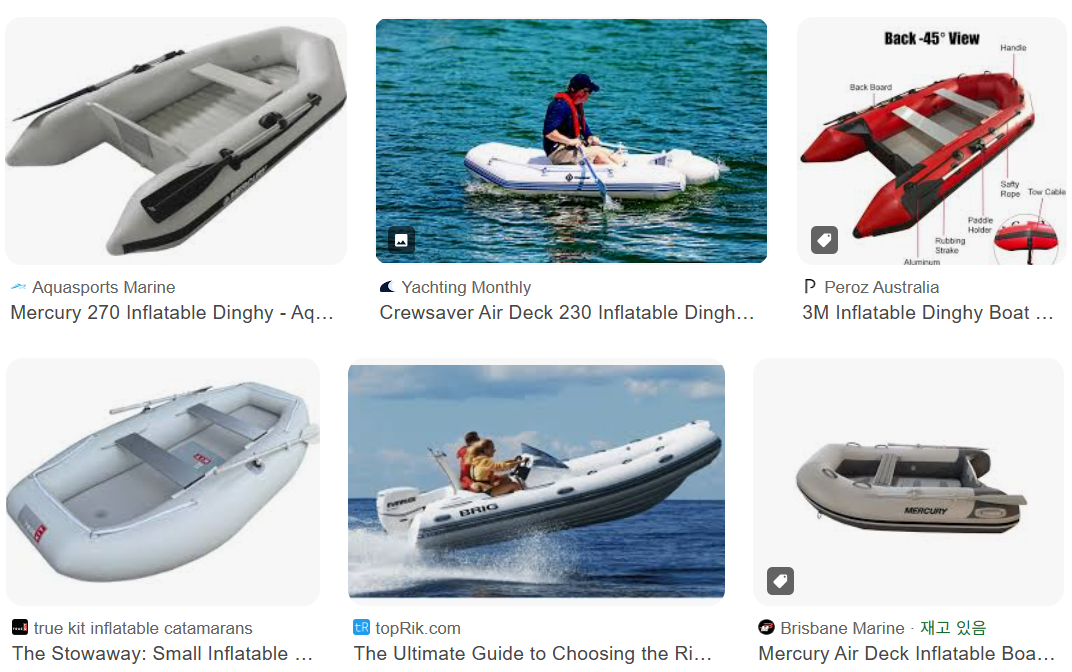
5. Inflatable Dingy(인플레이터블 딩기)
📌 RIB(Rigid Inflatable Boat)는 딱딱한 선저(rigid hull)에 인플레이터블 튜브를 결합한 형태로, 더 높은 성능을 제공한다.
✔️ A small boat with inflatable tubes forming the hull sides and buoyancy. Easily deflated for storage. Used as tenders, rescue craft, or leisure boats.
✍️ 공기를 채운 튜브가 선체 측면과 부력 구조를 형성하는 소형 보트. 공기를 빼면 접어서 보관할 수 있다. 텐더(모선과 육지 사이 연락정), 구조정, 레저용으로 사용된다.
6. Intermediate Bearing(중간 베어링)
📌 샤프트가 길수록 중간 베어링이 필수적이다. 베어링 마모는 진동 증가로 나타나므로 정기적 점검이 필요하다.
✔️ A bearing fitted along a long propeller shaft between the gearbox and the stern tube, to support and align the shaft and prevent vibration or whipping.
✍️ 긴 프로펠러 샤프트의 기어박스와 스턴 튜브(stern tube) 사이에 설치되는 지지 베어링. 샤프트를 정렬시키고 진동 또는 휘어짐(whipping)을 방지한다.
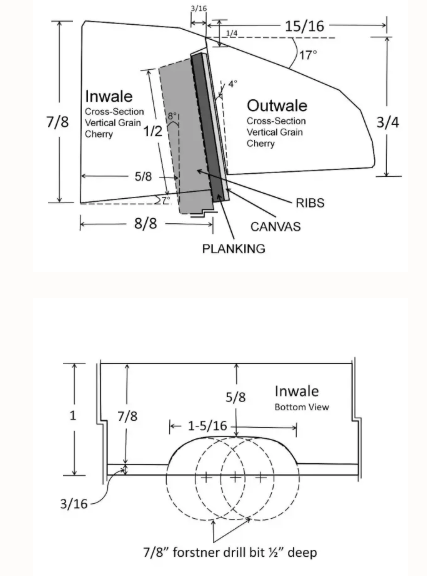
7. Inwale(인웨)
📌 특히 오픈 딩기와 캐뉴(canoe)에서 중요한 구조 부재다. 프레임 상단을 서로 연결하여 선형을 유지한다.
✔️ A longitudinal structural member running along the inside of the hull at the top of the frames — the inner counterpart of the outwale (rubbing strake). Together, they sandwich and reinforce the top of the hull sides.
✍️ 선체 상단부 프레임 안쪽을 따라 종방향으로 이어지는 구조 부재. 바깥쪽의 아웃웨일(outwale, 건현 상단 외부 보강재)과 함께 선체 상단부를 샌드위치처럼 보강한다.
1. Jaw(죠)(죄는 부분)
📌 전통 개프 리그에서 볼 수 있는 부품이다. 현대 베르뮤다 리그(bermuda rig)의 붐 고우즈넥(gooseneck)에 해당하는 역할을 한다.
✔️ The forked fitting at the forward end of a gaff or boom that wraps around the mast. It allows the spar to pivot while remaining attached to the mast.
✍️ 개프(gaff) 또는 붐(boom)의 앞끝에서 마스트를 감싸는 포크(fork) 형태의 피팅. 스파(spar)가 마스트에 연결된 채로 피벗 운동을 할 수 있게 한다.
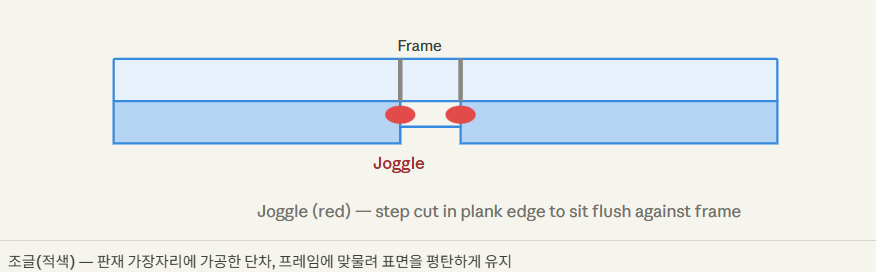
2. Joggle(Longitudinal Planking)(조글)
📌 종방향 플랭킹에서 판재가 프레임과 직각이 아닐 때 발생하는 간격 문제를 해결하기 위한 기법이다.
✔️ A small step or notch cut into one plank so that the edge of an adjacent plank fits flush against a frame or another structural member — keeping the outer surface smooth despite changes in plank width.
✍️ 인접 판재의 가장자리가 프레임이나 구조 부재에 딱 맞게 맞물리도록 판재에 가공하는 작은 단차(step) 또는 홈. 판재 폭이 변하더라도 외판 표면을 매끄럽게 유지한다.
3. Joker(조커)
📌 조커 밸브가 해조류나 오물로 막히면 역류 방지 기능이 상실된다. 정기적인 청소와 교체가 필요하다.
✔️ A one-way flap valve fitted in the cockpit drain or bilge pump outlet, preventing seawater from flowing back into the boat when the vessel heels or is pooped by a wave.
✍️ 콕핏 배수구 또는 빌지 펌프 배출구에 설치되는 일방향 플랩 밸브. 선박이 기울거나 파도가 덮칠 때 해수가 역류하여 선내로 들어오는 것을 방지한다.
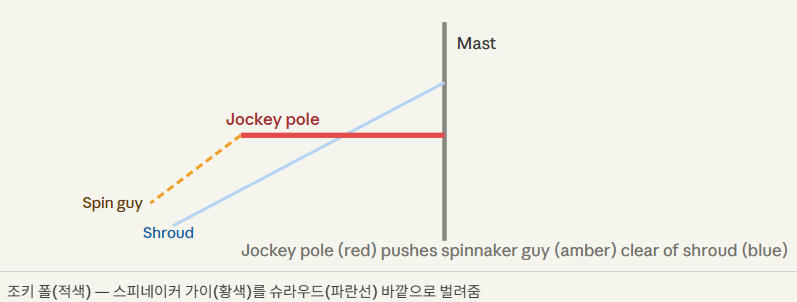
4. Jockey Pole(Reaching Strut)(조키 폴/리칭 스트럿)
📌 '리칭 스트럿'이라고도 한다. 스피네이커 폴과는 다른 부품이다. .
✔️ A horizontal pole projecting from the mast or shroud chainplate to hold the spinnaker guy out horizontally, preventing it from chafing against the shrouds and improving sail shape when reaching.
✍️ 마스트 또는 체인 플레이트에서 수평으로 뻗어나와 스피네이커 가이(guy)를 슈라우드 바깥쪽으로 당겨주는 폴. 슈라우드와의 마찰을 방지하고 리칭(reaching) 시 스피네이커 형태를 개선한다.

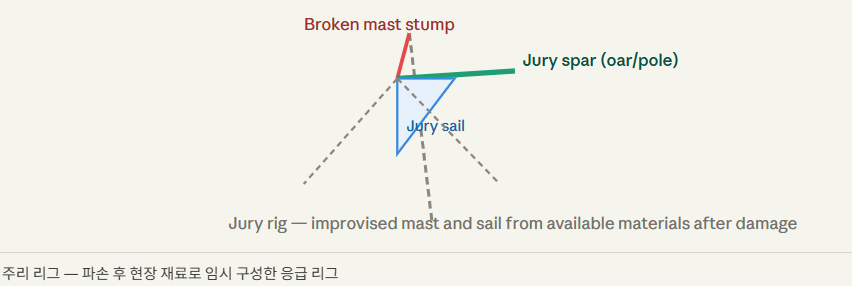
5. Jury(Jury Rig)(주리 리)
📌 "jury mast", "jury rudder" 등으로 파생된다. 외양 항해자에게는 주리 리그 구성 능력이 중요한 생존 기술이다.
✔️ A makeshift temporary rig or repair assembled from available materials after damage at sea — a broken mast, rudder, or other critical component. The word implies improvisation under emergency.
✍️ 항해 중 마스트 파손, 러더 손실 등 중대한 손상 발생 시 현장에서 가용 재료로 임시 제작하는 응급 리그 또는 수리. '임시방편'의 의미를 내포한다.
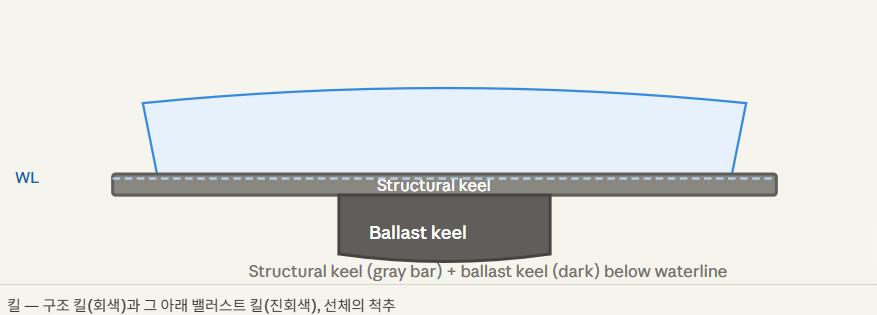
1. Keel(킬)
📌 킬의 형태(장핀 킬, 핀 킬, 벌브 킬 등)는 항해 성능과 복원력을 결정하는 핵심 설계 요소다.
✔️ The central longitudinal structural member running along the bottom of the hull from bow to stern — the backbone of the vessel. On sailing yachts, a ballasted keel below the hull provides stability and resists leeway.
✍️ 선체 바닥을 따라 선수에서 선미까지 뻗어 있는 중앙 종방향 구조 부재 — 선체의 척추. 범선 요트에서는 선체 아래 납·철로 된 밸러스트 킬이 복원력을 제공하고 횡류를 방지한다.
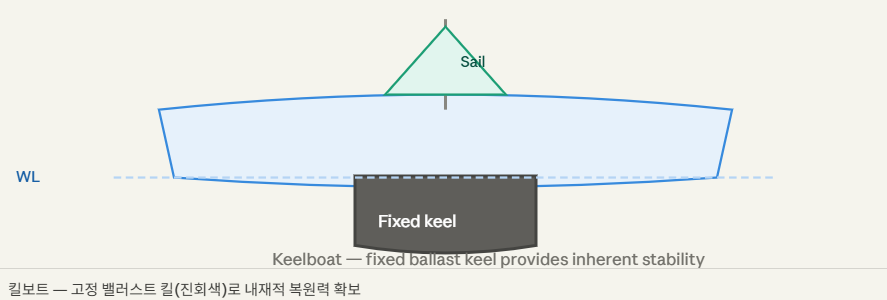
2. Keelboat(킬보트)
📌 킬보트는 충분한 복원 모멘트가 있어 일반적으로 전복되지 않는다. 크루저 요트의 대부분이 킬보트다.
✔️ A sailing vessel with a fixed ballast keel, giving it inherent stability that cannot be capsized by righting — unlike a centreboard dinghy. Can be left at a mooring without risk of sinking if flooded.
✍️ 고정 밸러스트 킬을 가진 범선으로, 내재적 복원력으로 인해 전복되어도 자동 복원이 어렵다. 센터보드 딩기와 달리 계류장에 방치해도 침수에 의한 침몰 위험이 상대적으로 낮다.
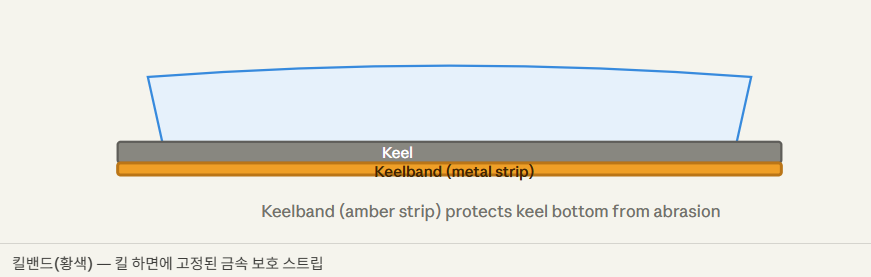
3. Keelband(킬밴드)
📌 스테인리스 스틸 또는 황동으로 제작되며, 볼트로 킬링면에 고정된다. 정기적으로 마모 상태를 점검해야 한다.
✔️ A metal strip or band fitted along the bottom of the keel to protect it from abrasion when the boat is grounded, beached, or launched over a hard surface.
✍️ 선박이 좌초되거나 해변에 올라가거나 슬립웨이(slipway)를 통해 진수될 때 킬 바닥을 마찰로부터 보호하는 금속 스트립 또는 밴드.
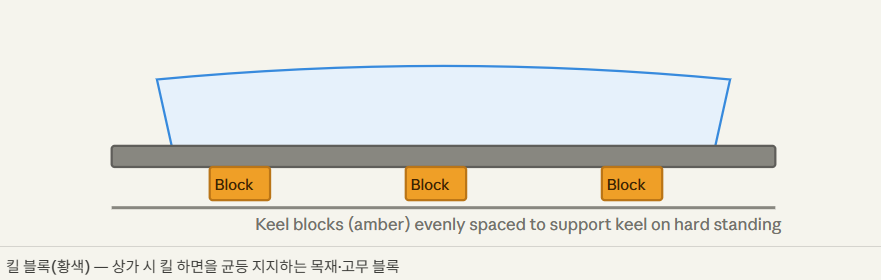
4. Keel Block(킬 블록)
📌 킬 블록의 부적절한 배치는 선체 변형을 일으킬 수 있다. 크레이들과 함께 사용되는 경우가 많다.
✔️ A wooden or rubber block placed under the keel in a dry dock or boatyard to support the vessel when hauled out. Multiple keel blocks are carefully positioned to distribute the hull's weight.
✍️ 드라이 도크 또는 보트야드에서 상가된 선박의 킬 아래에 놓이는 목재 또는 고무 블록. 여러 개의 킬 블록을 신중하게 배치하여 선체 하중을 고르게 분산시킨다.
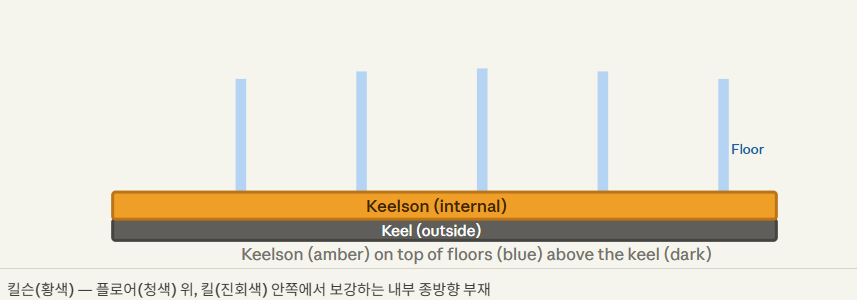
5. Keelson(킬슨)
📌 킬슨은 킬의 강성을 배가시키고 플로어 하단을 연결하는 역할을 한다. 호그 피스(hog piece)와 유사한 기능이나 위치가 다르다.
✔️ An internal longitudinal member laid on top of the floors (transverse frames at the bottom), directly above the keel, to reinforce and strengthen the keel structure from inside.
✍️ 킬 바로 위, 선저 플로어(floor) 위에 종방향으로 설치되어 킬 구조를 안쪽에서 보강하는 내부 부재.
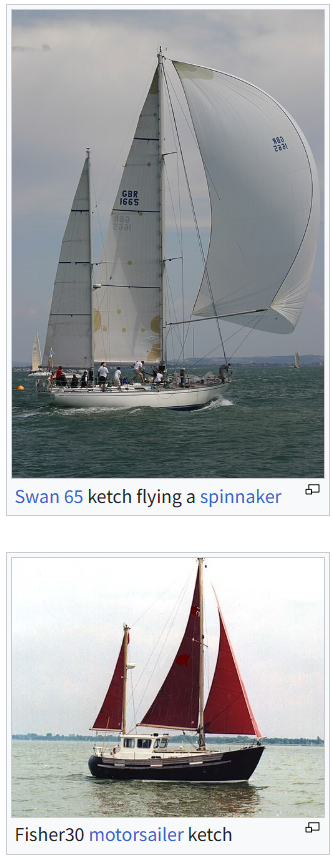
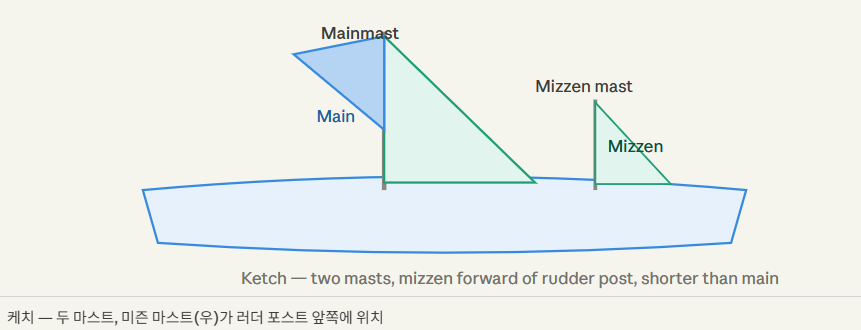
6. Ketch(케치)
📌 욜(yawl)과 유사하나, 욜은 미즌 마스트가 러더 포스트 뒤쪽에 위치한다는 점이 다르다.
✔️ A two-masted sailing rig where the mizzen mast is stepped forward of the rudder post and is shorter than the mainmast. Popular for offshore cruising as the rig can be split into smaller, manageable sails.
✍️ 미즌 마스트(mizzen mast)가 러더 포스트(rudder post) 앞쪽에 위치하고 메인 마스트보다 짧은 2마스트 범장. 범장을 여러 작은 돛으로 분산할 수 있어 원양 크루저에서 인기가 많다.
7. King Plank(킹 플랭크)
📌 킹 플랭크는 데크 플랭킹의 기준선 역할을 하며, 헤링본 데크에서는 중심 기준이 된다.
✔️ The central plank running along the exact centreline of a laid deck, from which all other deck planks splay outward symmetrically. It is usually wider and of contrasting timber for visual effect.
✍️ 레이드 데크(laid deck)의 정중앙 중심선을 따라 놓이는 판재로, 나머지 모든 데크 판재가 이것에서 좌우 대칭으로 펼쳐진다. 보통 더 넓고 대비되는 목재로 만들어져 시각적 효과도 있다.
8. Knees(니)
📌 행잉 니(hanging knee, 수직), 로징드 니(lodging knee, 수평), 브레스트후크(breasthook, 선수부 수평) 등 위치와 방향에 따라 다양한 종류가 있다.
✔️ Angled bracket-like structural members used to reinforce joints between two other members that meet at an angle — such as a beam to a frame, or a transom to the hull sides. May be natural crooks, sawn timber, or metal.
✍️ 두 구조 부재가 각도를 이루며 만나는 접합부를 보강하는 각형(angular) 브래킷. 빔-프레임, 트랜섬-선측 등의 접합부에 사용된다. 자연산 크룩(crook), 가공 목재, 또는 금속으로 제작한다.

1. Laid Deck(레이드 데)
📌 진정한 레이드 데크는 티크 판재가 두꺼워 수십 년간 사용 가능하다. 얇은 티크 베니어 데크와 혼동하지 말 것.
✔️ A traditional deck construction using narrow wooden planks (typically teak) laid longitudinally with dark caulked seams between them over a structural subdeck. Aesthetically distinctive and slip-resistant.
✍️ 구조용 하부 데크(subdeck) 위에 좁은 목재 판재(주로 티크)를 종방향으로 붙이고, 판재 사이 이음새를 검은 코킹 컴파운드로 마감한 전통 데크 방식. 시각적으로 아름답고 미끄럼 방지에 효과적이다.
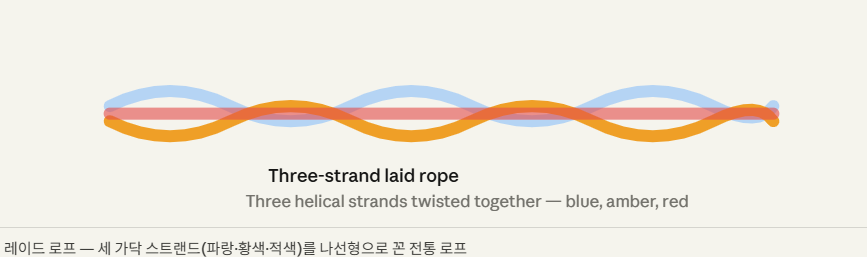
2. Laid Rope(레이드 로프)
📌 레이드 로프는 브레이드 로프보다 스플라이싱(splicing)이 쉽다. 전통 목조 선박과 어선에서 여전히 사용된다.
✔️ Traditional rope construction where strands are twisted together (laid) in a helical pattern — usually three strands laid right-handed. Contrasts with braided rope, which has interwoven strands.
✍️ 복수의 스트랜드(strand)를 나선형으로 꼬아 만든 전통적 로프 구조. 보통 세 가닥을 오른 방향(right-hand lay)으로 꼰다. 스트랜드가 짜여 있는 브레이드 로프(braided rope)와 대비된다.
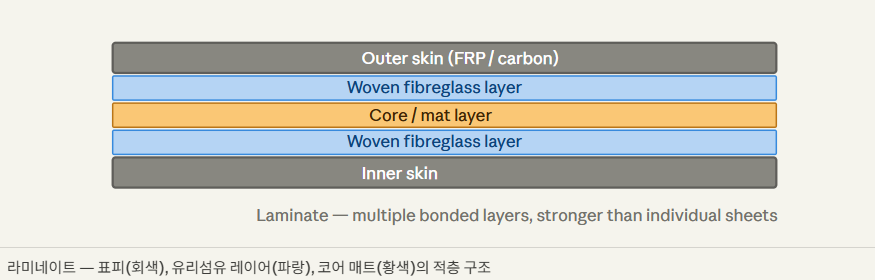
3. Laminate(라미네이트)
📌 라미네이트의 두께, 적층 각도, 수지 함량이 최종 강도와 강성을 결정한다.
✔️ A material or structure made by bonding multiple layers together — fibreglass cloth and resin, wood veneers and glue, or carbon fibre layers. The combined layers have greater strength and stiffness than individual sheets.
✍️ 여러 겹의 재료를 접착제나 수지로 결합하여 만든 복합 구조 재료. 유리섬유 클로스와 수지, 목재 베니어와 접착제, 탄소섬유 레이어 등이 대표적이다.
4. Laminating Jig(라미네이팅 지그)
📌 지그의 정확도가 최종 부재의 형태를 결정한다. MDF 또는 합판으로 제작하는 것이 일반적이다.
✔️ A temporary mould or former over which thin laminate strips are glued and clamped to form a curved structural member — such as a bent frame, tiller, or deckbeam — without using steam or heat.
✍️ 증기나 열 없이 얇은 목재 스트립이나 라미네이트를 접착·고정하여 곡선형 구조 부재(벤트 프레임, 틸러, 데크 빔 등)를 성형하기 위한 임시 형틀(mould/former).

5. Lapstrake(랩스트레이)
📌 유럽에서는 '클링커', 미국에서는 '랩스트레이크'라고 부르는 동일한 건조 방식이다.
✔️ See Clinker Construction — the American term for the same planking method, where each plank overlaps the one below. The lap edge is fastened with rivets or clench nails.
✍️ 클링커 공법(Clinker Construction)의 미국식 명칭. 각 판재가 아래 판재 위에 겹치는 방식으로, 겹치는 부분을 리벳 또는 클렌치 네일로 고정한다. ▶ C20. Clinker construction(Lapstrake)(클링커/랩스트레이크) 참조.
6. Lash(래싱)
📌 적절한 래싱은 항해 중 장비 이동 방지를 위한 기본 기술이다. 과도하게 타이트한 래싱은 장비 손상의 원인이 된다.
✔️ To secure something with rope, cord, or webbing — binding it firmly in place. A lashing is the binding itself. Used to secure dinghies, spars, sails, or equipment on deck.
✍️ 로프, 코드, 웨빙(webbing)으로 물체를 단단히 묶어 고정하는 행위 또는 그 묶음 자체. 딩기, 스파, 돛, 장비 등을 데크에 고정할 때 사용한다.
7. Length Overall(LOA)(전장/엘오에이)
📌 마리나 계류 비용, 등록, 보험 등에서 가장 일반적으로 사용되는 선박 길이 기준이다. LWL(수선 길이)과 구별된다.
✔️ The total length of a vessel measured from the foremost point (stem or bowsprit) to the aftermost point (transom or stern fitting), including all fixed attachments.
✍️ 선박의 가장 앞쪽 끝(스템 또는 스프릿)에서 가장 뒤쪽 끝(트랜섬 또는 선미 피팅)까지의 전체 길이. 고정 부착물을 모두 포함한다.

8. Length Waterline (LWL)
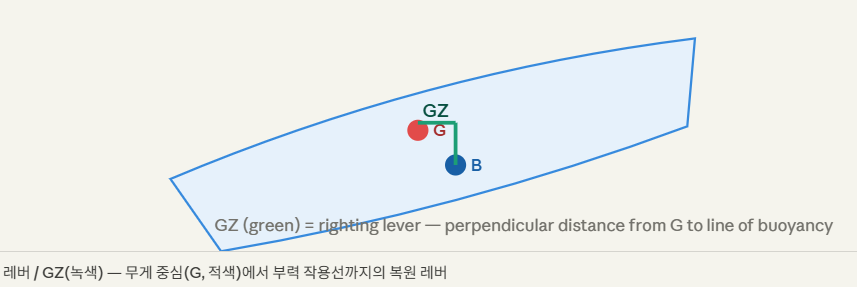
📌 GZ(복원 레버)는 선박 안정성 계산의 핵심 파라미터다. GZ가 클수록 복원력이 크다.
✔️ The length of the hull measured at the waterline — from where the bow enters the water to where the stern leaves it. Directly influences the vessel's theoretical maximum hull speed.
✍️ 선박 설계에서 무게 중심 또는 부력 중심으로부터 힘의 작용선까지의 수직거리 — 복원력 계산의 '모멘트 팔(lever arm)'. 또한 선박 피팅에 사용되는 기계적 레버를 가리키기도 한다.
9. Lever(레버)
📌 킬의 형태(장핀 킬, 핀 킬, 벌브 킬 등)는 항해 성능과 복원력을 결정하는 핵심 설계 요소다.
✔️ In naval architecture, the perpendicular distance from the centre of gravity or buoyancy to the line of action of a force — the "lever arm" in stability calculations. Also, any mechanical lever used as a fitting on a vessel.
✍️ 선체 바닥을 따라 선수에서 선미까지 뻗어 있는 중앙 종방향 구조 부재 — 선체의 척추. 범선 요트에서는 선체 아래 납·철로 된 밸러스트 킬이 복원력을 제공하고 횡류를 방지한다.
10. Lifeline(라이프라인)
📌 라이프라인은 안전을 위한 최후 방어선이다. 와이어의 부식과 피팅의 느슨함을 정기적으로 점검해야 한다.
✔️ Wire or rope strung between stanchions along the deck edge to prevent the crew from falling overboard. Required by offshore racing rules above a certain boat length.
✍️ 데크 가장자리를 따라 스탠션(stanchion) 사이에 장착된 와이어 또는 로프로, 승무원이 선외로 떨어지는 것을 방지한다. 일정 길이 이상의 선박에서는 외양 레이싱 규정 등에 의해 필수 장착 요건이다.

11. Life Raft(라이프래프트)
📌 SOLAS(해상인명안전협약) 및 외양 레이싱 규정에서 필수 장비로 규정한다. 정기적인 서비스(검사·재충전)가 의무화되어 있다 ✔️ An inflatable emergency raft stowed in a canister or valise on deck, deployed automatically or manually when a vessel sinks or is abandoned. Required by SOLAS and offshore racing rules.
✍️ 데크 위 캐니스터 또는 발리즈(valise) 안에 압축 보관되다가 선박 침몰 또는 선박 포기 시 자동 또는 수동으로 펼쳐지는 비상용 인플레이터블 래프트.
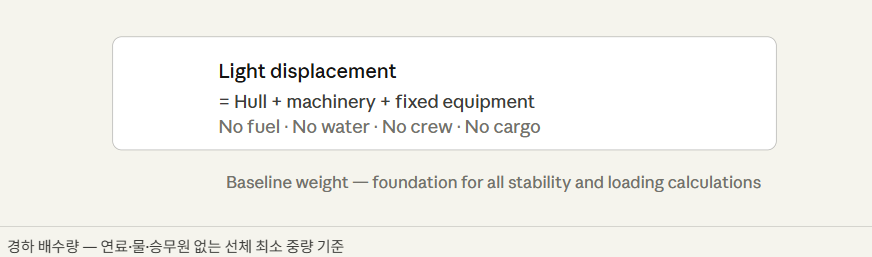
12. Light Displacement(경하 배수량)
📌 경하 배수량(light) + 선용품·연료·화물·승객 = 만재 배수량(full load displacement). 두 값의 차이는 선박의 적재 능력이다.
✔️ The weight of the vessel in its lightest operational state — hull, machinery, fixed equipment — without fuel, water, stores, crew, or cargo. The baseline displacement used for design calculations.
✍️ 연료, 물, 식량, 승무원, 화물 없이 선체·기관·고정 장비만의 최소 운항 상태 배수량. 선박 설계 계산의 기준 배수량이다.
13. Limber Holes(림버 홀)
📌 림버 홀이 막히면 고인 물이 목재를 부식시킨다. 보트 청소 시 정기적으로 소제해야 한다.
✔️ Small holes or notches cut through floors and frames at their lowest point, allowing bilge water to drain freely toward the bilge pump rather than pooling in low pockets. Also called hutchets.
✍️ 플로어와 프레임 하단에 뚫린 작은 구멍 또는 홈으로, 빌지 워터가 가장 낮은 지점으로 자유롭게 흘러내려 빌지 펌프로 배수되도록 한다. 'hutchets'라고도 한다. ▶ H25. Hutchets(허치츠) 참조.
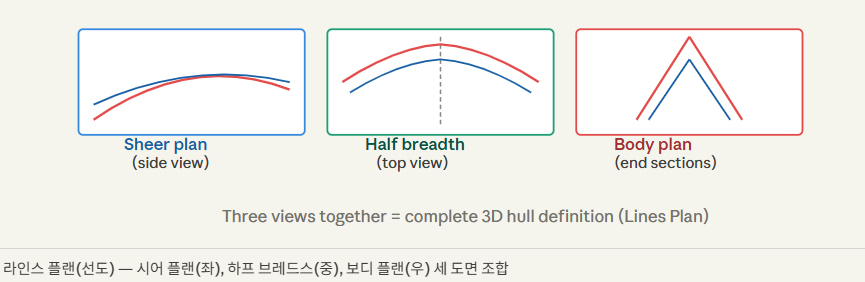
14. Lines(Lines Plan)(라인스/선도)
📌 세 도면에서 동일한 점이 모두 일치할 때 선형이 '공정(fair)'하다고 한다. 라인스 그리기는 전통 조선 설계의 핵심 기술이다.
✔️ The set of three orthographic drawings that together define the three-dimensional shape of a hull: the sheer plan (side view), half-breadth plan (top view), and body plan (end-on sections). Fundamental to all boatbuilding.
✍️ 선체의 3차원 형상을 완전히 정의하는 세 가지 정투영 도면의 집합 — 시어 플랜(측면도), 하프 브레드스 플랜(평면도), 보디 플랜(단면도). 모든 조선의 기초 설계 도면이다.
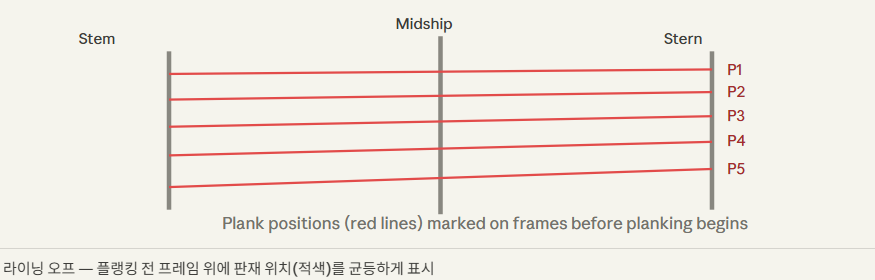
15. Lining Off(라이닝 오프)
📌 경험 있는 플랭킹 작업자에게도 라이닝 오프는 시간을 들여야 하는 핵심 준비 작업이다. 판재 수와 폭의 균형이 최종 선체 외관을 결정한다.
✔️ The process of marking the positions and widths of planks on the frames before planking begins, ensuring that plank widths taper evenly from midships to bow and stern — avoiding unsightly narrow or twisted planks.
✍️ 플랭킹을 시작하기 전, 프레임 위에 각 판재의 위치와 폭을 미리 표시하는 작업. 판재 폭이 중앙부에서 선수·선미로 향할수록 균등하게 테이퍼(taper)되도록 계획하여 불량 판재가 생기는 것을 방지한다.
16. Lodging Knee(로징드 니)
📌 행잉 니(수직 방향)와 함께 사용되어 데크-프레임 접합부를 완전히 보강한다.
✔️ A horizontal knee fitted in the plane of the deck, connecting a deck beam to a frame or shelf clamp. Resists the horizontal racking forces that try to distort the deck structure.
✍️ 데크 평면 내에서 수평으로 설치되어 데크 빔과 프레임 또는 클램프를 연결하는 니. 데크 구조를 뒤틀려는 수평 래킹 하중에 저항한다. ▶ K08. Knees(니) 참조.
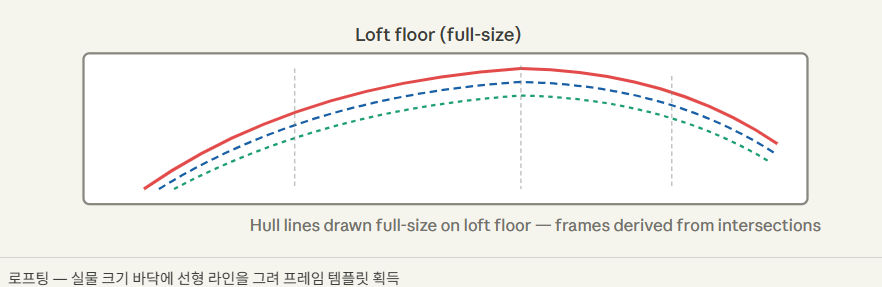
17. Lofting(로프팅)
📌 현대에는 CAD 소프트웨어가 대부분의 로프팅 작업을 대체했지만, 전통 목조 조선에서는 여전히 직접 로프팅을 하는 경우가 많다.
✔️ The process of drawing the hull lines full-size on a large flat floor (the loft), from the scaled lines plan, to obtain accurate templates for frames, patterns, and moulds. A traditional and critical step in wooden boatbuilding.
✍️ 축소된 라인스 플랜(lines plan)을 넓고 평평한 바닥(loft floor)에 실물 크기로 그려, 프레임·패턴·금형의 정확한 템플릿을 얻는 작업. 전통 목조 조선의 핵심 공정이다.
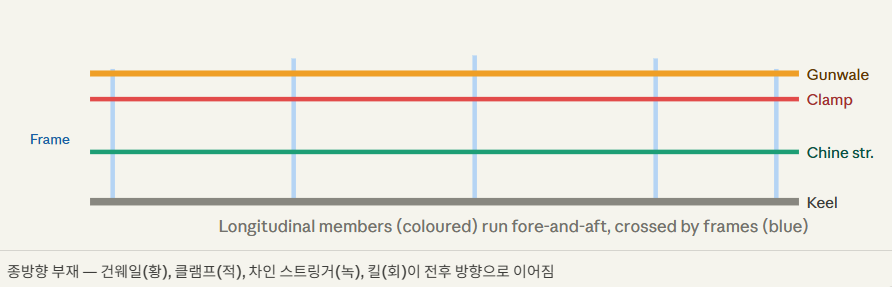
18. Longitudinal Members(종방향 부재)
📌 종방향 부재와 횡방향 부재(프레임, 데크 빔)가 결합되어 선체 구조의 3차원 강성을 형성한다.
✔️ Structural members running fore-and-aft along the length of the hull — keel, keelson, chine stringer, clamp, shelf, carlins, gunwale — providing longitudinal strength and rigidity.
✍️ 선체 길이 방향(전후 방향)으로 이어지는 모든 구조 부재의 총칭. 킬, 킬슨, 차인 스트링거, 클램프, 셸프, 칼린, 건웨일 등이 포함된다. 선체의 종방향 강도와 강성을 담당한다.
19. Luff(러프)
📌 러프 텐션(luff tension)은 돛의 드래프트(draft, 캠버) 위치를 조절하는 중요한 트리밍 파라미터다.
✔️ The leading (forward) edge of a fore-and-aft sail, running from the tack (lower corner) to the head (top corner). Also the verb: a sail luffs when it flaps due to being pointed too close to the wind.
✍️ 종범(fore-and-aft sail)의 앞쪽 가장자리로, 택(tack, 하단 전방 코너)에서 헤드(head, 상단 코너)까지 이어진다. 동사로는 돛이 바람 방향에 너무 가까워져 펄럭이는 것을 의미한다.

20. Lumber(럼)
📌 보트빌딩에 사용되는 목재는 건조율(moisture content), 나뭇결 방향, 옹이 유무가 중요하다. 티크(teak), 마호가니(mahogany), 참나무(oak), 더글러스 퍼(Douglas fir)가 대표적이다.
✔️ Sawn or milled timber — wood cut and prepared for construction use. In boatbuilding, it refers specifically to structural-grade timber ready for use as planking, frames, or other components.
✍️ 제재목재 — 건조·사용을 위해 켜고 가공된 목재. 보트빌딩에서는 플랭킹, 프레임, 그 밖의 구조 부재에 사용하기 위해 준비된 구조용 등급 목재를 가리킨다.
| 무역왕이 될 남자다! by. Geo |
| 글이 도움됐다면 로그인도 필요 없는 ☆공감★ 한번 꾸우욱~! 도움이 되었길 바라며. 오늘도 즐거운 하루!! |
'Boatbuilding Dictionary' 카테고리의 다른 글
| 보트 빌딩 용어 사전 - S_1 - (Boatbuilding Dictionary - S_1 -) (0) | 2026.05.19 |
|---|---|
| 보트 빌딩 용어 사전 - M, N, O, P, Q, R - (Boatbuilding Dictionary - M, N, O, P, Q, R -) (0) | 2026.05.19 |
| 보트 빌딩 용어 사전 - D & H - (Boatbuilding Dictionary - D & H -) (0) | 2026.05.13 |
| 보트 빌딩 용어 사전 - C - (Boatbuilding Dictionary - C -) (0) | 2026.05.11 |
| 보트 빌딩 용어 사전 - B - (Boatbuilding Dictionary - B -) (1) | 2025.10.10 |


