
| 일 | 월 | 화 | 수 | 목 | 금 | 토 |
|---|---|---|---|---|---|---|
| 1 | ||||||
| 2 | 3 | 4 | 5 | 6 | 7 | 8 |
| 9 | 10 | 11 | 12 | 13 | 14 | 15 |
| 16 | 17 | 18 | 19 | 20 | 21 | 22 |
| 23 | 24 | 25 | 26 | 27 | 28 | 29 |
| 30 | 31 |
- 요트제작
- Study Q&A
- boat terminology
- sailing vocabulary
- 로프팅
- shipwright
- 보트빌딩
- TAFEBoatbuilding
- boat parts explained
- TAFE보트빌딩
- yachtbuilding
- 조선용어
- boatbuilder education
- boatbuilding terms
- TAFE
- marineindustry
- yacht design basics
- 보트빌딩용어
- frp보트
- 선박용어사전
- TAFE Boatbuilding
- boatbuilding
- boatyard
- Gel Coat
- marine engineering
- Lofting
- NCRProcess
- 목공 기계
- Woodworking Machines
- compositeboat
- Today
- Total
The Yachtwright’s Legacy
Review: MEM25015A 장비·부속기기 조립 및 설치 본문
MEM25015A Assemble and install equipment and accessories/ancillaries
A note on sources
The unit codes and unit titles referenced in this post (e.g., the MEM/MSA codes) come from the Australian TAFE boatbuilding curriculum I studied over two years. Beyond borrowing that name and code, however, the actual written content was substantially researched, reorganised, and rewritten with the help of AI to reflect current boatbuilding practice — it is not a reproduction of any textbook, and in many places it differs significantly from the original course material.
If you are currently studying this unit, please treat this post as a personal study aid and general reference only — not as an accurate substitute for your actual coursework, assessment material, or your instructor's guidance. Always check your own institution's materials for anything that matters for assessment.
출처에 대한 안내
이 글에 언급된 과목 코드와 과목명(예: MEM/MSA 코드)은 제가 2년간 이수한 호주 TAFE 보트빌딩 과정에서 가져온 것입니다. 다만 그 이름과 코드를 가져온 것일 뿐, 실제 본문 내용은 AI의 도움을 받아 현재의 보트빌딩 관행에 맞게 상당 부분 조사하고 재구성하고 다시 쓴 것입니다. 특정 교재를 그대로 옮긴 것이 아니며, 여러 부분에서 원래 교재 내용과 상당히 다릅니다.
이 과목을 현재 수강 중이시라면, 이 글은 개인적인 학습 보조 자료이자 일반적인 참고용으로만 봐 주시고, 실제 수업 자료나 평가 자료, 강사님의 안내를 대신할 정확한 자료로는 여기지 말아 주세요. 평가에 반영되는 내용은 항상 소속 기관의 자료를 통해 확인하시기 바랍니다.
What this unit covers / 이 과목의 범위
MEM25015A deals with the practical skills used to assemble and install the equipment, accessories, and ancillary systems that turn a completed, fitted-out hull into a functioning vessel — propulsion machinery and its mounting and alignment, ancillary systems such as bilge pumps and steering gear, and deck accessories such as winches and windlasses. This unit sits after the general fitout unit and focuses specifically on equipment that has moving parts, needs precise alignment or adjustment, or must be commissioned and functionally tested before the vessel can be considered ready for service — as opposed to the largely static joinery and hardware covered in general fitout.
MEM25015A는 완성되고 의장이 끝난 선체를 실제로 작동하는 선박으로 만드는 장비, 액세서리, 부속 시스템을 조립하고 설치하는 실무 기술을 다룹니다. 추진 기관과 그 마운팅·얼라인먼트, 빌지 펌프나 조타 장치와 같은 부속 시스템, 그리고 윈치나 윈들러스 같은 데크 액세서리가 포함됩니다. 이 과목은 일반 피트아웃 과목 다음에 위치하며, 대체로 정적인 조인어리와 하드웨어를 다루는 일반 피트아웃과 달리, 움직이는 부품이 있거나 정밀한 얼라인먼트·조정이 필요하거나 선박이 운항 준비가 되었다고 판단되기 전에 커미셔닝(시운전)과 기능 시험을 거쳐야 하는 장비에 특히 초점을 맞춥니다.
Engine & Machinery / 엔진·기계장치
1. Engine bed construction / 엔진 베드 구조
The engine bed — the structural member the engine actually sits on and bolts to — must be stiff and strong enough to carry not just the engine's static weight, but the reaction torque it generates under load, without measurable flexing. A bed that flexes even slightly under load allows the engine to move relative to the propeller shaft over each running cycle, which directly undermines the shaft alignment covered later in this unit no matter how carefully that alignment was originally set. Engine beds are therefore built with the same structural rigour as other primary load-bearing members covered in the structural units, not treated as a simple platform.
엔진 베드 — 엔진이 실제로 얹히고 볼트로 고정되는 구조 부재 — 는 엔진의 정적 무게뿐만 아니라 하중을 받을 때 발생하는 반작용 토크까지도, 눈에 띄는 휨 없이 견딜 만큼 충분히 단단하고 강해야 합니다. 하중을 받아 조금이라도 휘는 베드는 매 운전 사이클마다 엔진이 프로펠러 샤프트에 대해 상대적으로 움직이게 하며, 이는 원래 얼라인먼트가 얼마나 신중하게 맞춰졌는지와 무관하게 이 과목 뒤에서 다룰 샤프트 얼라인먼트를 직접적으로 훼손합니다. 따라서 엔진 베드는 단순한 받침대로 취급되지 않고, 구조 관련 과목에서 다룬 다른 주요 하중 지지 부재와 동일한 수준의 구조적 엄격함으로 제작됩니다.
2. Flexible engine mounts / 유연 엔진 마운트
Flexible mounts (rubber or composite isolators fitted between the engine feet and the bed) absorb vibration and reduce noise transmission into the hull, and are selected to match the engine's weight, torque output, and the specific mount manufacturer's load rating rather than chosen generically. Mount selection and installed height also directly affect shaft alignment, since a soft or incorrectly loaded mount allows more engine movement under load — mount selection is therefore not a separate decision from alignment, but part of the same overall installation plan.
유연 마운트(엔진 발과 베드 사이에 장착하는 고무나 복합재 절연체)는 진동을 흡수하고 선체로 전달되는 소음을 줄이며, 범용으로 선택하는 것이 아니라 엔진의 무게, 토크 출력, 그리고 해당 마운트 제조사의 하중 등급에 맞춰 선택합니다. 마운트 선택과 설치 높이는 샤프트 얼라인먼트에도 직접적인 영향을 주는데, 너무 부드럽거나 부하가 잘못 걸린 마운트는 하중을 받을 때 엔진이 더 많이 움직이게 하기 때문입니다. 따라서 마운트 선택은 얼라인먼트와 별개의 결정이 아니라 전체 설치 계획의 일부입니다.
3. Shaft alignment / 샤프트 얼라인먼트
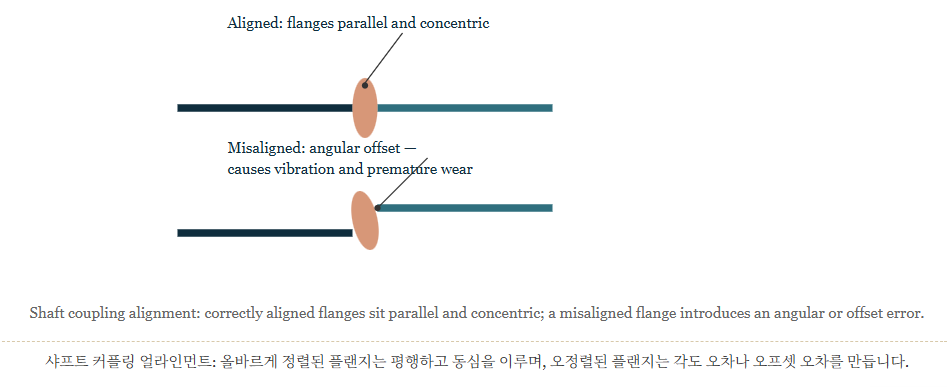
Shaft alignment means positioning the engine so that its output coupling flange is both parallel to and concentric with the propeller shaft's coupling flange, within the tolerance specified by the engine and coupling manufacturer — typically checked with feeler gauges measured at several points around the coupling face, or a dial indicator for tighter tolerances. Misalignment outside tolerance causes excessive vibration, accelerated wear on the shaft's cutlass bearing and stuffing box or shaft seal, and, over time, fatigue damage to the coupling itself; it is one of the most common causes of an otherwise well-built vessel developing an unexplained vibration or premature drivetrain wear.
샤프트 얼라인먼트란 엔진의 출력 커플링 플랜지가 프로펠러 샤프트의 커플링 플랜지와 평행하면서도 동심(중심이 일치)이 되도록, 엔진과 커플링 제조사가 지정한 허용오차 내로 엔진을 배치하는 것을 의미합니다. 일반적으로 커플링 면 주위 여러 지점에서 필러 게이지로 측정하거나, 더 엄격한 허용오차의 경우 다이얼 인디케이터로 확인합니다. 허용오차를 벗어난 오정렬은 과도한 진동, 샤프트의 커틀러스 베어링과 스터핑 박스(또는 샤프트 실)의 가속된 마모, 그리고 시간이 지나면서 커플링 자체의 피로 손상을 일으킵니다. 이는 그 외에는 잘 만들어진 선박에서 원인을 알 수 없는 진동이나 조기 드라이브트레인 마모가 발생하는 가장 흔한 원인 중 하나입니다.
4. Exhaust and cooling system installation / 배기·냉각 시스템 설치
On a wet exhaust system, the exhaust hose run must maintain a continuous rise (or an anti-siphon device at the correct height) from the water injection point up to a high point before descending to the outlet, so that seawater cannot siphon back through the exhaust and into the engine when the engine is stopped or at low RPM — a very common and often expensive failure mode on incorrectly routed exhaust systems. Cooling water intake and strainer placement, similarly, follows the specific engine manufacturer's installation manual rather than a generic assumption, since intake height, strainer accessibility, and flow requirements vary meaningfully between engine models.
습식 배기 시스템에서는, 엔진이 정지되거나 저속으로 운전될 때 해수가 배기관을 거슬러 엔진 안으로 사이펀될 수 없도록, 배기 호스 경로가 물 주입 지점에서부터 배출구로 내려가기 전까지 연속적으로 상승하는 구간을 유지하거나(또는 적절한 높이에 사이펀 방지 장치를 두어야) 합니다. 이는 잘못 배관된 배기 시스템에서 매우 흔하고 종종 비용이 큰 고장 형태입니다. 냉각수 흡입구와 스트레이너 위치 역시 범용적인 가정 대신 해당 엔진 제조사의 설치 매뉴얼을 따라야 하는데, 흡입 높이, 스트레이너 접근성, 유량 요구사항이 엔진 모델에 따라 상당히 다르기 때문입니다.
Ancillary Equipment / 부속 장비
5. Bilge pump installation / 빌지 펌프 설치
A bilge pump is fitted at the actual lowest point water will collect at — which is not always the geometric lowest point of the hull once trim, heel, and internal structure are accounted for — and paired with a float switch that activates the pump automatically as water rises, without relying on someone remembering to switch it on manually. Where the discharge outlet is routed above the waterline, an anti-siphon loop (a high point in the discharge hose above the waterline, sometimes fitted with a vented valve) is required to stop water siphoning back into the bilge through the pump when the vessel heels or the pump is not running — the same siphon principle covered in the exhaust system, applied here to a different system.
빌지 펌프는 트림, 힐(경사), 내부 구조를 고려했을 때 물이 실제로 모이는 최저 지점(항상 선체의 기하학적 최저점과 일치하지는 않음)에 설치하며, 누군가가 수동으로 켜는 것을 기억해야 하는 것이 아니라 물이 차오르면 자동으로 작동하는 플로트 스위치와 함께 사용합니다. 배출구가 흘수선 위쪽으로 배관되는 경우, 선박이 기울거나 펌프가 작동하지 않을 때 물이 펌프를 통해 빌지로 다시 사이펀되는 것을 막기 위해 안티사이펀 루프(흘수선보다 높은 배출 호스의 상승 구간으로, 때로는 환기 밸브가 장착됨)가 필요합니다. 이는 배기 시스템에서 다룬 것과 동일한 사이펀 원리를, 여기서는 다른 시스템에 적용한 것입니다.

6. Steering systems / 조타 시스템
Cable, hydraulic, and rack-and-pinion steering systems are each installed to the specific manufacturer's geometry and travel specifications — full lock-to-lock travel must match the rudder's or outboard's actual mechanical stops, with a small margin, rather than the steering system's own internal stop being reached before (or well after) the rudder's real limit. The system is checked through its full range of motion for binding, excessive friction, or any point where cable tension or hydraulic pressure builds unexpectedly, since a system that feels fine near centre can still bind or over-tension near full lock.
케이블, 유압, 랙앤피니언 조타 시스템은 각각 해당 제조사가 지정한 형상과 작동 범위 사양에 맞춰 설치합니다. 완전 좌우 회전 범위는 조타 시스템 자체의 내부 스톱이 러더나 아웃보드의 실제 기계적 한계보다 먼저(또는 훨씬 늦게) 도달하는 것이 아니라, 약간의 여유를 두고 러더나 아웃보드의 실제 기계적 스톱과 일치해야 합니다. 시스템은 전체 작동 범위에 걸쳐 걸림, 과도한 마찰, 또는 케이블 장력이나 유압이 예상치 못하게 높아지는 지점이 있는지 확인합니다. 중앙 부근에서는 괜찮게 느껴지는 시스템도 완전 회전 지점 근처에서는 걸리거나 장력이 과도해질 수 있기 때문입니다.
7. Winches and windlasses / 윈치와 윈들러스
Winches and windlasses are mounted with the same backing plate and load-spreading principles covered in the fitout unit, since these fittings routinely see high, sudden loads (a windlass under an anchor load in a strong current, for example) that a deck skin alone cannot be relied on to carry. Electrical or hydraulic supply lines to powered winches and windlasses are sized and protected (correct cable gauge, appropriately rated circuit breaker or fuse) according to the manufacturer's specification, since an undersized supply line is both a fire risk and a common cause of a winch underperforming its rated capacity.
윈치와 윈들러스는 피트아웃 과목에서 다룬 것과 동일한 백킹 플레이트와 하중 분산 원리로 장착합니다. 이러한 피팅은 정기적으로 높고 갑작스러운 하중(예: 강한 조류 속에서 앵커 하중을 받는 윈들러스)을 받으며, 데크 스킨만으로는 이를 감당할 수 있다고 신뢰할 수 없기 때문입니다. 전동 또는 유압식 윈치·윈들러스로의 전력 공급선은 제조사 사양에 따라 크기를 정하고 보호합니다(올바른 케이블 규격, 적절히 정격화된 회로 차단기나 퓨즈). 용량이 부족한 공급선은 화재 위험이면서, 윈치가 정격 용량만큼 성능을 내지 못하는 흔한 원인이기도 합니다.
8. Following the manufacturer's manual / 제조사 매뉴얼 준수
Almost every piece of equipment covered in this unit comes with a manufacturer's installation manual specifying clearances, torque values, fastener types, orientation requirements, and service access needs — and the manual, not general boatbuilding habit or a similar-looking past installation, is the authoritative source for that specific piece of equipment. Deviating from the manual without a documented, specific reason (and ideally the manufacturer's confirmation) risks voiding warranty coverage and, more importantly, risks a genuine functional or safety problem that the manufacturer's engineers have already identified and designed around.
이 과목에서 다루는 거의 모든 장비에는 여유 공간, 토크 값, 체결재 종류, 방향 요구사항, 서비스 접근 필요성을 지정하는 제조사 설치 매뉴얼이 딸려 있으며, 일반적인 보트빌딩 습관이나 비슷해 보이는 과거의 설치가 아니라 그 매뉴얼이 해당 특정 장비에 대한 권위 있는 자료입니다. 문서화된 구체적인 이유(그리고 가능하다면 제조사의 확인) 없이 매뉴얼에서 벗어나는 것은 보증 적용을 무효화할 위험이 있으며, 더 중요하게는 제조사의 엔지니어들이 이미 파악하고 그에 맞춰 설계해 둔 실제 기능적·안전 문제를 초래할 위험이 있습니다.
Alignment & Commissioning / 얼라인먼트·커미셔닝
9. Functional testing before handover / 인도 전 기능 시험
Before a vessel is considered ready for service, installed equipment is functionally tested rather than assumed to work because it was installed correctly on paper — the engine is run through its operating range checking for leaks, unusual noise, and correct gauge readings; bilge pumps are tested by actually raising the water level rather than just confirming the switch clicks; steering is exercised through full lock in both directions; and all alarms (high water temperature, low oil pressure, bilge alarm, and similar) are deliberately triggered to confirm they actually alert, rather than trusting that a wired alarm will necessarily also be a working one.
선박이 운항 준비가 되었다고 판단하기 전에, 설치된 장비는 서류상 올바르게 설치되었으니 작동할 것이라고 가정하지 말고 실제로 기능 시험을 거칩니다. 엔진은 작동 범위 전체에 걸쳐 운전하며 누출, 이상 소음, 정확한 게이지 판독값을 확인합니다. 빌지 펌프는 스위치가 딸깍하는 것만 확인하는 것이 아니라 실제로 수위를 높여서 시험합니다. 조타 장치는 양방향 완전 회전까지 작동시켜 봅니다. 그리고 모든 알람(고온, 저유압, 빌지 알람 등)은 배선된 알람이 반드시 작동하는 알람이기도 할 것이라고 믿는 대신, 실제로 경보가 울리는지 확인하기 위해 의도적으로 발생시켜 봅니다.
10. Engine break-in / 엔진 브레이크인(초기 가동)
A new or newly rebuilt engine generally requires a break-in period following the manufacturer's specific schedule — typically a period of varied load and RPM rather than either extended idling or immediately running at full throttle — allowing piston rings and other wearing surfaces to seat correctly. Skipping or rushing this schedule in the interest of getting the vessel into service faster risks permanently reduced engine performance and shortened service life, which is a poor trade against the relatively short time the correct break-in period actually takes.
신품이거나 새로 오버홀된 엔진은 일반적으로 제조사가 지정한 특정 일정에 따른 브레이크인(초기 가동) 기간이 필요합니다. 보통 장시간 공회전이나 즉시 완전 스로틀로 운전하는 대신, 다양한 부하와 회전수로 운전하는 기간이며, 이는 피스톤 링과 다른 마모 표면이 올바르게 자리 잡도록 해 줍니다. 선박을 더 빨리 운항에 투입하려고 이 일정을 건너뛰거나 서두르면, 실제로 올바른 브레이크인 기간이 걸리는 상대적으로 짧은 시간에 비해 나쁜 거래인, 영구적인 엔진 성능 저하와 사용 수명 단축의 위험이 있습니다.
11. Commissioning documentation / 커미셔닝 문서화
A commissioning record — noting alignment measurements, torque values applied, fastener types used, alarm test results, and initial gauge readings taken during first run — is worth keeping for every major piece of installed equipment, since it gives a genuine baseline to compare against during later maintenance, rather than the vessel's owner or a future mechanic having to guess whether a current reading is normal or already indicates a developing problem.
설치된 모든 주요 장비에 대해, 얼라인먼트 측정값, 적용된 토크 값, 사용된 체결재 종류, 알람 시험 결과, 첫 운전 시 얻은 초기 게이지 판독값을 기록한 커미셔닝 기록을 남겨 두는 것이 좋습니다. 이는 선박의 소유자나 이후의 정비사가 현재 판독값이 정상인지 아니면 이미 문제가 진행되고 있음을 나타내는지 추측해야 하는 상황 대신, 이후 유지보수 시 비교할 수 있는 실제 기준선을 제공합니다.
Tools & Safety / 도구·안전
12. Tools and equipment / 도구 및 장비
| Tool / 도구 | Use / 용도 |
| Feeler gauges/dial indicator | Measures alignment offset around a shaft coupling face, as described above. 위에서 설명한 대로, 샤프트 커플링면 주위의 얼라인먼트 오차를 측정합니다. |
| Torque wrench | Applies manufacturer-specified torque to critical fasteners, avoiding both under-tightening (which risks loosening in service) and over-tightening (which can damage the fastener or the fitting). 중요한 체결재에 제조사가 지정한 토크를 적용하여, 과소조임(사용 중 풀릴 위험)과 과다조임(체결재나 피팅 손상 위험) 모두를 방지합니다. |
| Engine hoist/crane | Lifts and positions heavy machinery safely and with fine control during installation, rather than relying on manual lifting alone. 설치 중 무거운 기계장치를 안전하고 정밀하게 들어 올리고 배치하며, 수동 인력만으로 드는 것에 의존하지 않습니다. |
| Multimeter/pressure gauge | Verifies correct electrical or hydraulic system operation during commissioning testing. 커미셔닝 시험 중 전기 또는 유압 시스템이 올바르게 작동하는지 확인합니다. |
13. Safe working practices / 안전 작업 수칙
- Use correctly rated lifting equipment and follow safe rigging practice when moving engines or other heavy machinery, since these items are both heavy and often awkward to balance during a lift.
- Isolate electrical systems and fuel supply before working on or near an engine, and confirm isolation is effective before beginning work rather than assuming a switch position alone guarantees it.
- Be aware that engine and exhaust components remain very hot for some time after running, and allow adequate cooling time before working on them directly.
- Depressurise hydraulic steering or other hydraulic systems before opening any fitting, since residual pressure in a hydraulic line can cause a serious injury if released suddenly near skin or eyes.
- Ensure adequate ventilation when running an engine indoors or in an enclosed space, even briefly for testing, due to exhaust gas hazards.
- Follow safe access and confined-space practices when working inside an engine bay or similar tight machinery space, which can present restricted movement, heat, and poor ventilation.
- 엔진이나 기타 무거운 기계장치를 옮길 때는 올바르게 정격화된 리프팅 장비를 사용하고 안전한 리깅 방법을 따릅니다. 이러한 장비는 무겁고 들어올리는 동안 균형을 잡기 어려운 경우가 많습니다.
- 엔진 위나 주변에서 작업하기 전에는 전기 시스템과 연료 공급을 차단하고, 스위치 위치만으로 차단이 확실하다고 가정하지 말고 실제로 차단이 유효한지 확인합니다.
- 엔진과 배기 부품은 운전 후 한동안 매우 뜨거운 상태로 유지된다는 점을 유의하고, 직접 작업하기 전에 충분한 냉각 시간을 둡니다.
- 유압 조타 장치나 기타 유압 시스템의 어떤 피팅이든 열기 전에 압력을 해제합니다. 유압 라인에 남아 있는 압력이 갑자기 방출되면 피부나 눈 근처에서 심각한 부상을 일으킬 수 있습니다.
- 배기가스 위험 때문에, 잠시 시험운전을 하는 경우라도 실내나 밀폐된 공간에서 엔진을 운전할 때는 충분한 환기를 확보합니다.
- 엔진실이나 비슷하게 좁은 기계 공간 내부에서 작업할 때는 안전한 접근과 밀폐공간 작업 수칙을 따릅니다. 이러한 공간은 제한된 움직임, 열기, 열악한 환기를 초래할 수 있습니다.
'Marine Composites' 카테고리의 다른 글
| Review: MSAENV272B 환경적으로 지속가능한 작업 실천에 참여하기 (0) | 2026.08.03 |
|---|---|
| Review: MEM25013B 3차원 플러그·몰드 제작 (0) | 2026.08.01 |
| Review: MEM25010B 선박 피트아웃(의장) 작업 (0) | 2026.07.31 |
| Review: MEM25008B 선박 표면·구조물 보수 (0) | 2026.07.30 |
| Review: MEM25007B 선박 표면 유지관리 (0) | 2026.07.29 |


